STA CEO and Chair discuss current challenges for tourism industry with Scotland’s First Minister
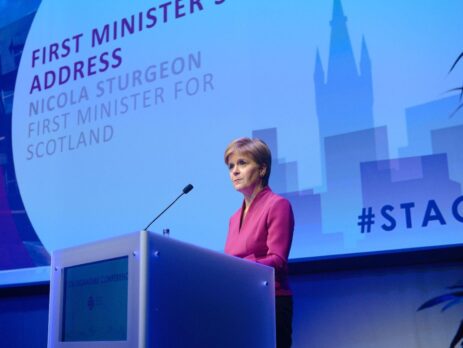
STA CEO Marc Crothall and Chair, Stephen Leckie had a call yesterday with Scotland’s First Minister, Nicola Sturgeon to discuss various issues and challenges which Scotland’s tourism industry is currently experiencing.
The following topics were discussed:
- Scottish Government Short Term Lets Consultation and future policy
- The future outlook and levels of grant support for tourism and hospitality business, as furlough alone is not enough to ensure business survival
- The impacts of the tier system on the tourism/hospitality sectors
- Request for a Scottish Government commitment to allocate more money to the sector following the announcement of the extra £1bn from the Treasury:
- Upweighting and broadening the £14m Hotel Support Fund
- Supporting the Inbound Tour Operator Fund proposal of £15m
- Increasing the funding commitment to the Emerging Talent proposal already submitted
- Making fixed grants available to those business in the sector who remain closed (or who have been forced to close) and to those in the sector who have fallen through the gap
- Testing – what commitment is there to agreeing to Glasgow and Edinburgh airports doing trial testing? Both are keen and ready to do so in coming weeks.
The call was scheduled for half an hour, however, the First Minister generously offered us more than 45 minutes to hear evidence on how hard the pandemic has hit the tourism sector and took time to explain the rationale behind current government policy and restrictions to curb the virus.
The conversation started on the topic of the Short Term Let Consultation; Fiona Campbell, Chief Executive of the Association of Scotland’s Self Caterers was invited to the call to put forward views and evidence from the sector and asked that given the current uncertainty within the self-catering sector and timescale for proposed STL legislation, that the consultation is postponed, the sector is given time to recover from the impact of the pandemic and not burdened with further regulation and cost at the moment. She highlighted the fact that the ASSC is not against regulation but that more time is required for potential legislation to be properly scrutinised and that the ASSC is committed to working with the Scottish Government to ensuring a positive outcome on the area of short term lets for Scottish tourism.
The First Minister stated that she can’t give a commitment to postponement but will commit to considering the points that the ASSC had put forward carefully in its letter of October which was co-signed by a broad range of sector and wider business organisations. She also said that the Business and Regulatory Assessment (BRIA) will be made public and that one of the purposes of the consultation is to gather views that influence the preparation of the BRIA, which will be published along with legislation.
Ms Sturgeon highlighted the fact that the Scottish Government is committed to listening carefully to the evidence presented to them and will continue to do that in this case, but will have to balance the other side of it which is looking at the purpose of the proposals in the first place. She reiterated that she takes on board all points and that the purpose of part of the overall objective of the consultation is to have a responsible and sustainable approach to tourism recovery; however there are a number of difficult issues to balance and the Scottish Government will endeavor to do that. She has said that a more detailed response will come in the near future.
The conversation moved on to impact and support for recovery, with Marc outlining one of the biggest concerns within the industry, which is that there simply isn’t enough financial support to aid in some cases survival of business but for many to see them through to recovery; he said the extension of furlough is hugely welcomed of course, protecting jobs for many employees who had been at greater risk of redundancy but it is not enough on its own, to guarantee the protection of businesses from becoming insolvent. Increased support is needed right across the sector for those open and those who have remained closed, such as visitor attractions and other business in the sector that have fallen through the gap. He asked Stephen to share his own thoughts and business insights
Stephen Leckie acknowledged the difficulty faced by the Scottish Government in making the right decisions. He said: “For tourism and hospitality businesses, we hang on to your every words and the ramifications they create are significant. The issue now is simply about money, as we hemorrhage cash. My company has hotels in Tiers 1, 2 and 3, so the scale of closure and redundancy is immense. Within seconds of the announcement that Perth & Kinross would be moving into Tier 3 we were receiving cancellations. I was on the phone to the Chief Executive of a wine supplier at the time and he told me that he could hear the calls coming in to cancel orders to the hospitality sector as the address to the Scottish Parliament was being given.
Furlough is good for staff but it’s not good for businesses. We still have to pay National Insurance and other administrative costs. The removal of the Job Retention Scheme Bonus is a huge swipe to our company finances; we have lost many hundreds of thousands of pounds as a result of government decisions over the last 10 days.”
Stephen also highlighted the fact that he had spoken to hoteliers the length and breadth of the country who are now closing their doors as all are making too much of a loss in staying open. He asked how long the tier system might last and when it is likely that Perth & Kinross, Fife and Angus will come out of Tier 3.
The First Minister responded; “If we don’t get the virus under control, the damage to the economy will be worse. There is a sense that if we didn’t have the restrictions in place, everything would be fine; in fact it would be worse, the virus would be running more rampant than it is. I can’t answer definitively when Perth & Kinross, Fife and Angus will be out of level 3 but I hope by taking quick action to put them in level 3 that will be sooner rather than later. If we had left it a week later, we may have been waiting longer in level 3. We are doing our best to navigate through this phase in a proportionate and targeted way; if we lose control we will be in another national lockdown and nobody wants that. If we put one of these areas down a level before it’s safe to do so it will do further damage.”
She added: “I can’t give you a date, but hopefully that gives you an insight into our thinking.
On the issue of increased financial support for the sector, the First Minister said: “The sector does need more financial support. Furlough is good but it’s not enough and we are working through the recommendations of the Task Force. We also have to think a little bit more about business rates for the financial year, but I fully understand what you’re asking for and we are looking at how we supplement grant support for certain sectors. I can tell you this is under very active and speedy consideration.
Marc also highlighted the importance of increased grants for the inbound tour operator sector and that unless business are able to trade and operate, they will be unable to bounce back to get the international market going again next year and require immediate financial support to navigate their way through the next few months. He referred to the proposal submitted to the Cabinet Secretary which sets out the support needed to protect these business enabling them to operate and drive the recovery pipeline, highlighting these business will generate c£100m of direct income, filling hotels, booking coaches tours and so on.
Marc then raised the ask for supporting an accelerant in the trial testing at airports to help build future traveler confidence.
On the subject of testing at airports, the First Minister said that the Scottish Government is continuing to advance this as much as possible
On the subject of why the hospitality industry has been more heavily restricted that any other sector and the evidence behind government decisions and policy, the First Minister said: “We look at what we know about the conditions in which the virus spreads and what we know about the conditions that are in certain places. We don’t allow people to go into each other’s houses at the moment because we know this is a risk, places with poor ventilation, places with alcohol; we put this information together with Test and Protect and it allows us to draw conclusions around where the virus is likely to be spread.
I am afraid that within hospitality, these are the conditions that are the most conducive to this virus transmitting. I know this is hard for the sector and that is why your points are so valid and well-made but if we don’t tackle it in this way, it will run riot and do more damage.”
The First Minister ended the call saying: “Take it from me, we are working at pace and trying to offer as much financial support as we can. I can see an end to this that is much firmer than would have been the case even a week ago. We have to remember that and follow as proportionate an approach as we can between now and then.
We are trying our hardest to avoid another national lockdown and that means going hard where the virus is getting out of control. If we are to get to normality, we need to keep making sure that we are pressing down hard on the areas where things are more at risk.”
She added; “The consequences for your sector are severe and we are determined to step up and do as much as we can. You are right to press us to do more. I do understand the severity of the situation and we do listen because we respect your voice and value the role of the sector in its value to economy and the jobs it creates.
I can’t guarantee that we will be out of it by February or Easter. There are a lot of hurdles to be overcome on a vaccine but all the news this week is very positive. I am very hopeful that we will be in a position by the end of this calendar year to be vaccinating people on a scale and pace that means that Easter might just start to look different. It’s not a guarantee but it’s some hope.”